

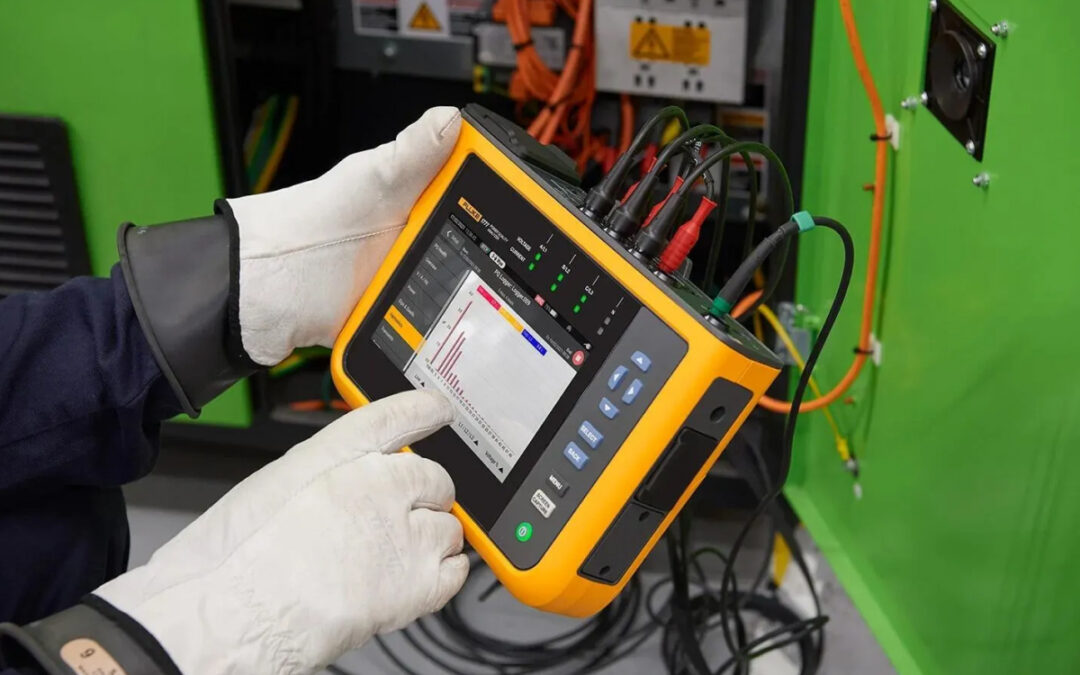
What IEC 61000-4-30 Class A Means for Electricians
When investigating power quality issues, the readings you rely on must be accurate. Measuring voltage and current is straightforward, but many power quality parameters were historically measured differently by each manufacturer. This made it difficult to compare results between instruments.
The IEC 61000-4-30 Class A standard solves this by defining how power quality measurements must be taken. It standardises measurement methods, time aggregation, accuracy, and evaluation of key parameters. Together with IEC 62586, it ensures results are reliable, repeatable and comparable across both portable and fixed instruments.
When Should You Use a Class A Instrument?
Class A instruments provide measurement uncertainty of around 0.1% across a wide voltage range. They also perform contiguous measurements for each 10 or 12 cycle interval, meaning events are captured without gaps.
Voltage dips, swells, interruptions and harmonic distortion are recorded at high resolution using defined aggregation windows. This reduces the risk of missing short disturbances.
Harmonic Measurement Consistency
Class A instruments measure harmonics using the IEC 61000-4-7 FFT subgroup method. This standardised approach ensures harmonic magnitudes remain consistent between different instruments measuring the same supply.
Why Accurate Time Synchronisation Matters
Class A devices also use precise timestamping, often synchronised through GPS or NTP. Accurate timing allows events recorded by different instruments to be compared, helping identify the source of disturbances across electrical networks.
Benefits of Class A Power Quality Instruments
- Confidence in regulatory compliance
- Faster troubleshooting of power quality issues
- Reliable comparison between instruments and sites
- Measurements that can support contractual or regulatory discussions
FAQs
Do I need a Class A meter?
For professional installations, utilities and larger facilities, Class A meters provide accurate and standardised measurements.
What is the difference between Class A and Class S?
Class A instruments meet stricter accuracy and timing requirements. Class S is generally used for basic monitoring.
Can Class A measurements be used legally?
Yes. They follow recognised international standards and can support compliance or dispute resolution.
How do Class A instruments measure harmonics?
They use the IEC 61000-4-7 FFT subgroup method, ensuring consistent harmonic readings across compliant instruments.
Why are timestamps important?
Accurate timing allows electricians to correlate voltage events across multiple instruments and identify where disturbances originate.
New citations and references
- IEC 61000-4-30 – Electromagnetic compatibility (EMC) – Testing and measurement techniques – Power quality measurement methods
- IEC 62586 – Power quality measurement in power supply systems


